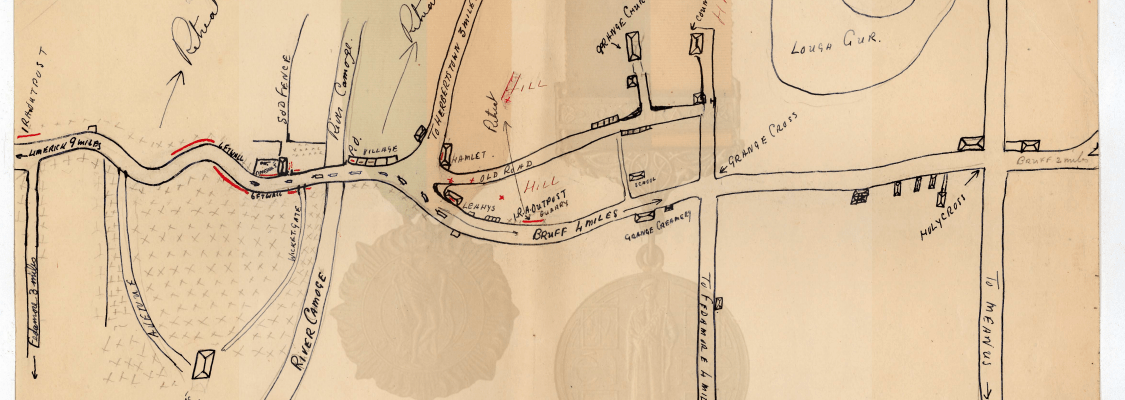
On this day 8 November in 1920, about 50 men of the 3rd Battalion of East Limerick, prepared around 5am on a cold morning. They were armed with 21 rifles and 21 shotguns and small quantity of explosives. It had been decided for them to ambush a British convoy at Grange bridge, about four miles from the town of Bruff. They set out and occupied positions, around John O’Neill’s house. At a quarry on the south of the bend, a number of volunteers were posted there with the reserve of the bombs and ammunition.
The 1st Battalion of the Royal Fusiliers were escorting a R.A.F convoy from Fermoy to Oranmore. The volunteers were expecting two British lorries to arrive at 9am; instead, it is believed eight lorries as well as two armoured cars arrived later in the day around noon
The action involved the columns of both the 3rd East Limerick and the 4th Battalion Mid Limerick flying columns, supported from various local companies that included Fedamore and Ballybricken. It was most of the men’s first experience fighting against an armoured car.
Donnchadha O’Hannigan had overall command of the combined columns and most of the ambushers were placed in houses and behind walls on both sides of the road.
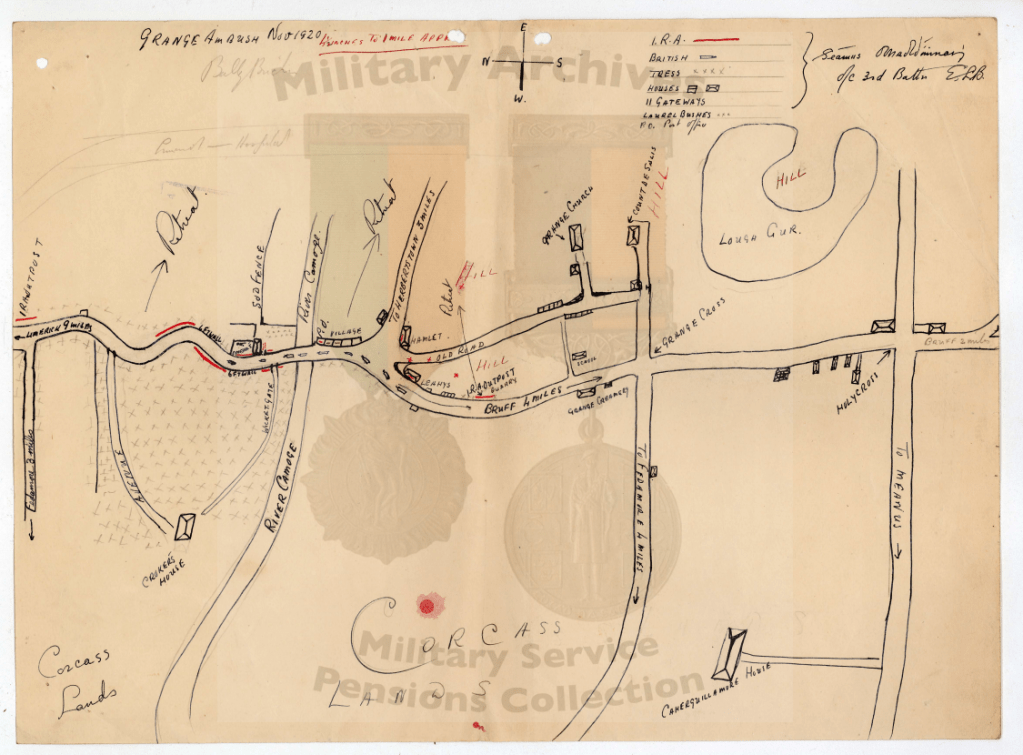
It would appear the British became suspicious and sent one lorry through. The first lorry that came along ended up being blown to bits, as the men had arranged a “sort of parapet erected by placing planks” that enabled them to look over and fire over the top of the wall. Both pistols and bombs were thrown into the lorry. The Volunteers at the quarry appear to have left off a shot that alarmed the rest of the lorries from running into the ambush position. The quarry was attacked and the supplies of reserve were captured. O’Dwyer who was leading the locals were occupying the higher ground south overlooking where the lorries stopped but having shotguns there was very little they could do from a distance.
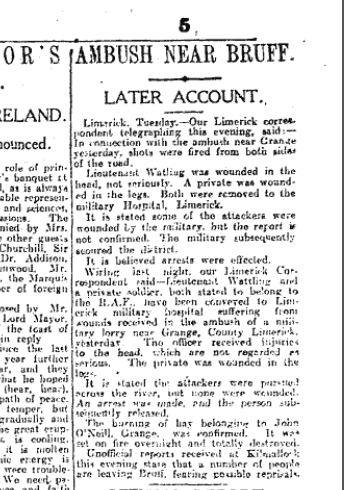
At this point they sent through a British Armoured Car, with an officer mounted on the running board firing a revolver, and the armoured car’s machinegun firing at the IRA at close range. The IRA account names the officer on the running board as Lt Watling, and they believe that they wounded him. As more British reinforcements appeared, and the IRA soon realised that they were up against a vastly larger force than they had anticipated, the retreat was called. Apart from one minor wounded man, they amazingly had no casualties. A number of men were in the post office at the bridge and they had to fight their way back out but again managed to do this and get away. Maurice Meade of Elton claimed to be near an officer who was shot and the took his revolver and sam brown belt that he wore until the truce.
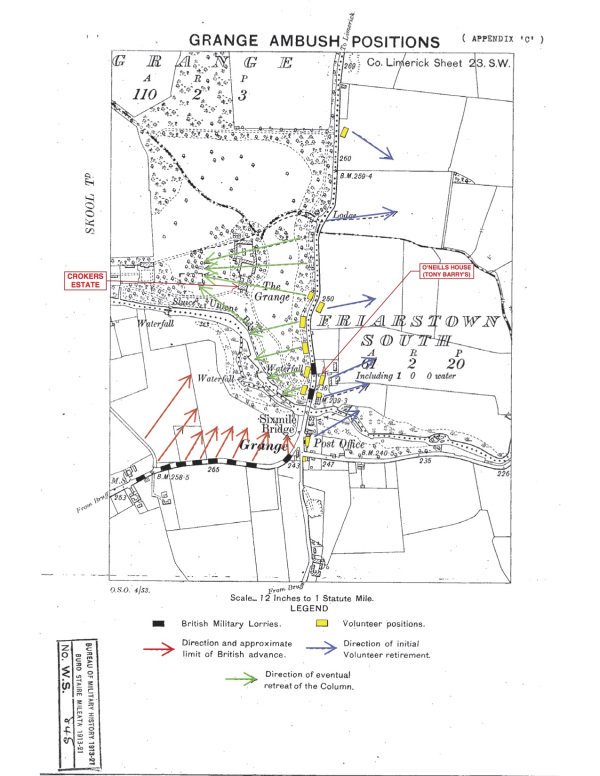
Luckily, none of the other lorries were able to make it over the river to the other side and remained south side of the water on the bend. When the British had begun to advance on their position, the cover they had on the Croker estate side in the grove under trees allowed them to open fire and push them back. The whole party then began their retreat. At one stage while retreating, Richard O’Connell of the Caherconlish volunteers realises that there were men still in Sheahan’s cottage opposite the lodge gate at the time of retreat and he ran down to get them out and they retreated eastwards. The British Regiment’s official account says that the rebels were speedily dealt with and a quantity of arms, ammunition and two prisoners were taken. Despite a number of the witness statements believing there were a number of officers shot dead, it would appear that no British soldiers were killed in the ambush, as there are no press reports of British Deaths. They do refer to Flying Officer Watling and Bandsman Bailey both being wounded, the latter seriously.
A memorial was later erected by the Seán Wall memorial committee in 2011. Orated by the late Tom Toomey at the time, he also noted the unique fact that the Curate at Fedamore, Fr. Carroll actually took part in the action. What was unique about was that Fr. William Joseph Carroll, Chaplain to the Mid Limerick Brigade, had been awarded the Military Cross for Bravery in 1918’ by the British Army.


 Bruff Heritage Group